
Special to Jazz Artistry Now written by Brett Kynard
The Lionel Hampton jazz bands, officially the Lionel Hampton Orchestra, were among the most popular and exciting groups in the 1940s and 1950s.
Hampton established himself from 1936 to 1940 with the Benny Goodman Quartet. This group produced many commercial recordings and radio broadcasts for Victor Records, which made Lionel Hampton a household name.
In 1940, Hampton formed his own big band. His genius, showmanship, and musical innovations translated to broad public appeal and popularity.
The band’s highly theatrical, high-energy stage performances were a key reason audiences flocked to see them. It was said that the Orchestra was renowned as a “finishing school” for young, brilliant jazz musicians.
The Hampton Orchestra gained significant fame and popularity through several key factors.
Gunther Schuller, author of The Swing Era: The Development of Jazz 1930-1945, described the talented, charismatic Lionel Hampton.
“Motored by a seemingly limitless supply of energy and stamina, Hampton’s playing is known the world over for its relentless physicality, unhampered technical facility, and a seemingly imperturbable inventiveness.”
Hampton’s performances always featured him racing between the vibraphone, drums, and piano, where he would play his signature two-fingered solos.
Hampton was the first major jazz vibraphonist and successfully popularized the instrument in a significant jazz ensemble, giving his band a distinctive, innovative sound. This Orchestra produced several smash hit recordings.
It was logical that Lionel Hampton and his Orchestra were the first musical groups to record for Snader Telescriptions between 1950 and 1952.
In a June 1950 Billboard magazine article, it was announced that Lionel Hampton would be the first artist to appear in a Snader Telescriptions film.
Snader Telescriptions was conceived in 1949 by Louis D. Snader, a wealthy real estate developer whose properties included various theaters in Southern California.
The name “telescriptions” was a combination of “television” and “transcriptions” (recordings intended for broadcast).
With the advent of television, his primary focus shifted from the big-screen lots to the small-screen arena.
This revolutionary concept consisted of short musical films that could serve as the competitive equivalent of radio transcriptions for the growing new television industry.
He invested in this innovative concept and founded Snader Telescriptions Corporation. These telescriptions, often called “visual records for television,” were produced between 1950 and 1952.
Telescriptions covered a variety of music genres, pop, swing, Jazz, western, and country. They also produced films of classical music performances.
This business was uniquely positioned to capitalize on the “Golden Age of Television,” which spanned the late 1940s through the 1950s and early 1960s.
Marketing was targeted at syndicated television stations to serve as “Fillers” to fill gaps in their broadcast schedules, which was common in the early days of television.
Syndicated television was a distribution method rather than a fixed set of National networks like ABC, CBS, or NBC.
Television stations would create a show around the telescriptions, often hiring a TV host or disc jockey to introduce the segments.
Daytime television was not programmed at this time history, broadcasts were made only during evenings. The cost per telescription filmed in the Los Angeles area was initially reported to be $1,800.
However, as the months went by, trade magazines reported that total expenses per telescription had risen to about $2,500, with the price tag being expected to climb to $3,000.
Termed “Programming Segments”.Individual telescription performances were short films about three minutes long, filmed in black and white.
Three cameras were used for these clips. Snader attracted several popular artists from Jazz, Swing, and Western genres. Jazz band artists, in addition to Lionel Hampton, included Nat King Cole, Duke Ellington and his Orchestra, Peggy Lee, Mel Tormé, Cab Calloway, Sarah Vaughn, and Les Brown. Charlie Barnet’s Big Band, Ralph Flanagan, Alvino Rey, Tony Pastor’s Big Band, and several others.
All artists were inked to three-year deals, guaranteed one of five sessions, plus options, with 5% royalties.
Lionel Hampton’s musical relationship with Snader Telescriptions began with a debut appearance on July 22, 1950. Hampton was filmed for five episodes, debuting alongside Martha Davis, a talented singer and pianist.
The first recorded female vocalist was Betty Carter, a future jazz star who performed a brief scat on Hampton’s “Cobb’s Idea”. Altogether, Hampton recorded eleven Snader telescription performances.
In 1950, they included Midnight Sun, Cobb’s Idea, TV Special, Who Cares, and Beulah’s Boogie.
In 1951, Love You Like Mad, Love You Like Crazy, Air Mail Special, Bongo Interlude, Vibe Boogie, Slide, Hamp, Slide, and Ding Dong Baby. Lionel Hampton’s Orchestra was a constant landing ground for new talent and the leading big band of its time, alongside bands like Duke Ellington’s and Count Basie’s.
The Hampton Orchestra’s talent and popularity translated to long-time success for this ever-evolving Institution, which lasted over seventy years. It had several prominent musicians throughout 1950 and 1952 who recorded with Snader.
Some of its noted Band members included trumpet players such as Quincy Jones, Duke Garrette, and Walter Williams, Trombone players Paul Higaki, Al Grey, and Benny Powell. Saxophone players included Bobby Plater, Curtis Lowe, Ben Kynard, and Jerome Richardson. Guitar player Billy Mackel, on Piano Milt Buckner, Bass Roy Johnson, and drums Ellis Bartee. Other musicians also played during these two years.
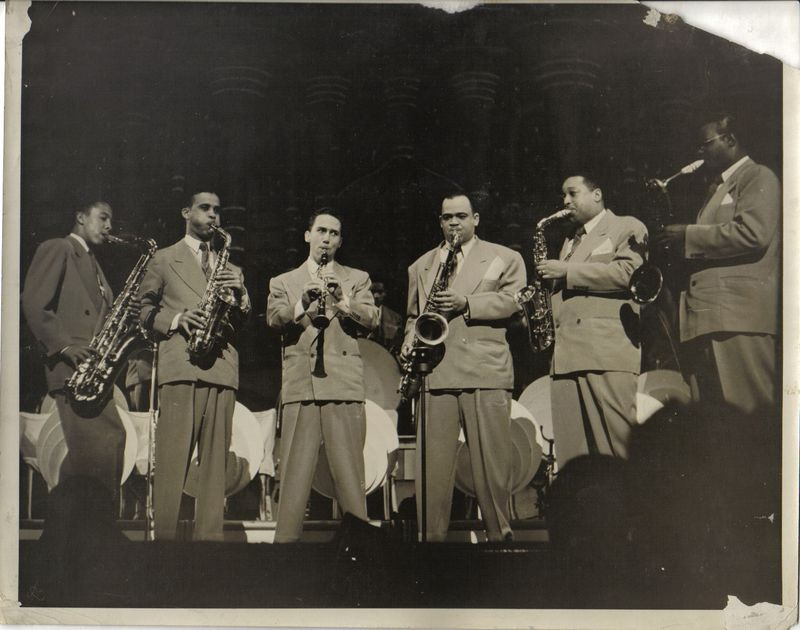
The saxophone was a prominent instrument of the day, and it carried the Orchestra because of its popularity in big bands across swing and Jazz. Big bands of that time period chose the saxophone for its wide range, expressiveness, and ability to blend well with brass and woodwind sections.
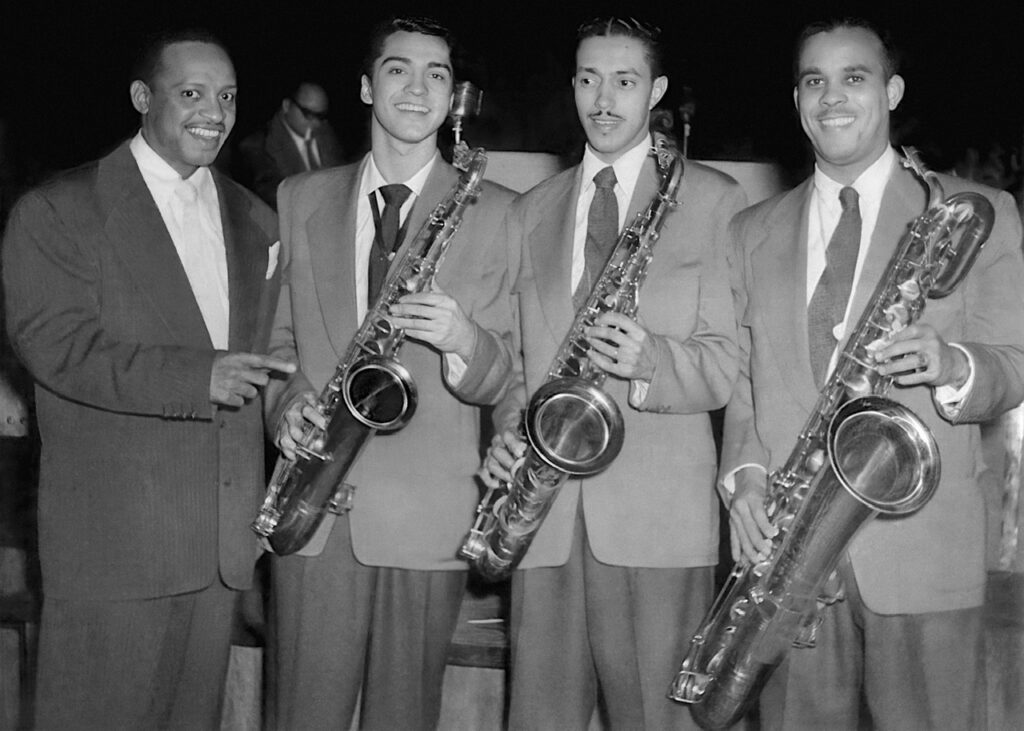
Hamp’s Orchestra was famous for its powerhouse saxophone section throughout the years. This legendary core of saxophonists was called the “Killer Saxes” or “The Saxes of Fire”. This section was famed for its intense, driving, high-energy, raw sound, courtesy of these soloists.
They were highlighted in many of Hamp’s popular songs. These tenor titans of the Snader recording period were led by Arnett Cobb and Ben Kynard, composer of “Red Top”.
Other noted legendary saxophonists in this core included Illinois Jacquet, famous for his solo on the 1942 recording “Flying Home”; Benny Goodman; Clifford Scott; Johnny Griffin; Ben Webster; Coleman Hawkins; and Dexter Gordon.
All of these musicians passed through the Hampton Orchestra on their way to individual stardom.
Famous songs featuring saxophone solos also included “Air Mail Special” and “One O’clock Jump”. Many other songs always featured solos by this core of saxophonists.
Snader “Telescriptions” featured many of the biggest names in American music at the time and are considered early music videos. Jazz & Popular Music Royalty, Country, Folk, & Big Band Leaders.
These short films helped launch the concept of a music video package on television, eventually leading to shows like American Bandstand, after two years of producing over 750 telecasts.
Snader sold its entire telescription library to a competitor, Ben Frye, Studio Films, Inc., in 1952. These shorts were marketed as “Studio Telescriptions” until 1954.
Frye Studio Films purchased it from Snader for $600,00. Snader had been involved with legal problems and was facing bankruptcy, according to some sources.
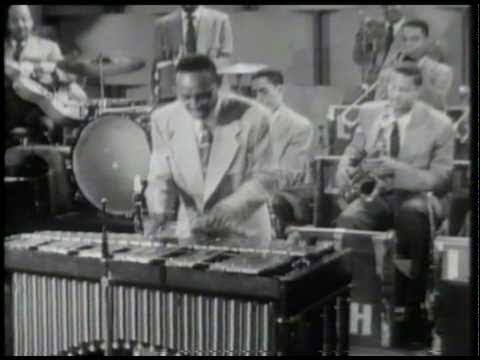
Lionel Hampton and his Orchestra, in association with the Snader Telescriptions Corporation, revolutionized musical performance broadcasts on television in the early 1950s.
Hampton and his Orchestra made a profound and multifaceted contribution to Snader television audiences by introducing swing and jazz music, influencing both the instrumental landscape and the social progress of the genre.
Hampton single-handedly took the vibraphone (or “vibes”) from a novelty percussion instrument (often used for studio sound effects) and established it as an essential solo instrument in Jazz.
His dazzling speed, technical dexterity, and inventive improvisations on the vibes became a signature sound of the Swing Era, inspiring countless musicians who followed him.
It is documented that the films focused on the musical performance itself, capturing the energy of Hampton’s band in a studio setting. Snader’s audiences were electrified by these performances, which propelled his popularity.
In addition, during a period of strict racial segregation, this group toured and performed for diverse audiences, demonstrating racial harmony on a public stage and serving as a powerful, pioneering symbol of integration in the arts.
Snader was the technical pioneer who opened the door to new ways to utilize the newfound television at the beginning of its golden age.
Snader also established the first comprehensive library of musical shorts explicitly created for television broadcasting, effectively becoming the earliest form of the modern music video. They set the precedent for using filmed music performances for promotion and programming.
Later, when many of these shorts were re-edited into longer programs like the Rhythm & Blues Revue (1955), producers often spliced in generic stock footage of an enthusiastic “Apollo audience” and canned applause to simulate a live concert experience for TV viewers. This suggests the producers anticipated a positive, energetic audience response consistent with Hampton’s reputation.
Snader expanded artists’ visibility by providing them with a new medium to reach a broad national audience.
For many musicians who were not major theatrical stars, these films offered unprecedented visibility through their television appearances. It established the program model that included a disc jockey or moderator who introduced the artist. This was the direct ancestor of popular music programs like American Bandstand and later, MTV.
Snader Telescriptions produced over 750 telescriptions from 1950 to 1952 and played a most significant historical role in the early days of music on television. And essentially serving as the medium’s first dedicated music videos.